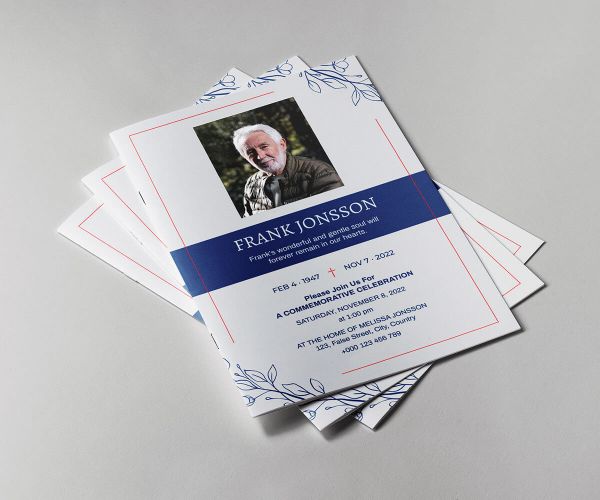
Creating an obituary booklet is a meaningful way to honor a loved one’s life and share their story with family and friends. A well-designed booklet serves not only as a keepsake but also as a comforting resource during the grieving process. Here are some essential tips to consider when designing an obituary booklet:
1. Gather Personal Information and Photos
- Start by collecting essential details about the deceased, including their full name, birth and death dates, and significant life milestones. Select high-quality photos that capture their personality and key moments in their life. These elements form the foundation of the booklet.
2. Choose a Theme and Color Scheme
- The theme and color scheme should reflect the personality and preferences of the deceased. Soft, muted colors are often chosen for their calming effect, but you might opt for a specific color that had significance in their life. The theme could be related to hobbies, achievements, or a favorite season or place.
3. Organize the Content Thoughtfully
- Structure the booklet to flow smoothly from one section to another. Common sections include the obituary, eulogy, family tree, and personal anecdotes. Consider using a table of contents if the booklet is extensive. Ensure that the content is organized in a way that guides readers through the life story being told.
4. Select Readable Fonts
- Typography plays a critical role in the readability of the booklet. Choose fonts that are clear and easy to read, even in low lighting. Combining a serif font for the body text with a sans-serif font for headings can create a visually pleasing contrast. Avoid overly decorative fonts that may distract from the content.
5. Incorporate Meaningful Quotes or Verses
- Including meaningful quotes, poems, or religious verses can add a personal touch to the booklet. These elements can provide comfort and reflect the values or beliefs of the deceased. Place these quotes in prominent areas such as the beginning of sections or at the end of the booklet.
6. Use High-Quality Paper and Printing
- The quality of the paper and printing will significantly impact the overall presentation of the booklet. Opt for durable, high-quality paper with a smooth finish that complements the color scheme. Professional printing services can ensure that the photos are crisp and the text is clear.
7. Proofread Carefully
- Before finalizing the booklet, thoroughly proofread the content for spelling, grammar, and factual accuracy. It’s a good idea to have multiple people review the booklet to catch any errors that may have been overlooked.
8. Personalize the Layout
- Personalization is key to making the booklet a true reflection of the individual. Consider adding elements such as handwritten notes, illustrations, or symbols that held special significance to the deceased. A personalized layout can make the booklet more intimate and memorable.
9. Add a Special Touch with Embellishments
- Adding embellishments like decorative borders, ribbons, or embossed details can enhance the aesthetic appeal of the booklet. These touches can make the booklet feel more like a cherished memento rather than just a program.
Conclusion
Designing an obituary booklet requires thoughtful consideration of both the emotional and practical aspects. By focusing on personalization, clarity, and quality, you can create a beautiful and meaningful tribute that honors your loved one’s memory and provides comfort to those who receive it. Designing an Obituary Booklet from scratch tips.
Leave a Reply